How to audit what you have said on TikTok
You are about to start a job search, or hand your account to a brand, or you just realised you have been publishing your opinions in public for four years and never reviewed any of it.
The instinct is to sit down and watch everything. But four hundred videos at ninety seconds each is ten hours, and you will not do it – and if you start, you will quit on a Sunday afternoon somewhere around post ninety. Audit by search instead. It is the same job, done in a way you will actually finish.
First, know what you are looking for
Vague review produces vague results. Write down the specific things before you start: a former employer’s name, a client, a person you no longer speak to, a product you endorsed, a position you have since changed your mind about.
Ten or fifteen terms. That is a list you can search. “Anything bad” is not.
Why this matters, at the size the evidence supports
I am not going to tell you a recruiter will definitely watch your TikToks, because nobody knows that. What research supports is narrower: work in the International Journal of Selection and Assessment examines how social media information can influence hiring-related assessments, and Brazilian research in Revista de Ciências da Administração documents cybervetting of candidates – that is, the practice of going through an applicant’s social accounts. It happens, and it can matter.
On the other side, the USENIX Security research on deletion privacy documents that people remove old content for ordinary reasons, one of which is that it simply stopped being relevant. In other words, cleaning up after an audit is normal behaviour, not an admission.
That is the full extent of what the evidence gives you. Anyone stretching it into “one old post will end your career” is trying to sell you something.
The searchable part is the spoken part
Here is why this is a search problem and not a scrolling problem: what you said out loud is the risky material, and it is written down nowhere. Not in the caption, not in the hashtags, not in your analytics.
FindMyTok transcribes your own published videos on your iPhone and indexes all of it. Then you run your fifteen terms against four years of audio and get back the posts and the exact seconds. Ten minutes instead of ten hours – and more thorough than your attention span would have been at hour six.
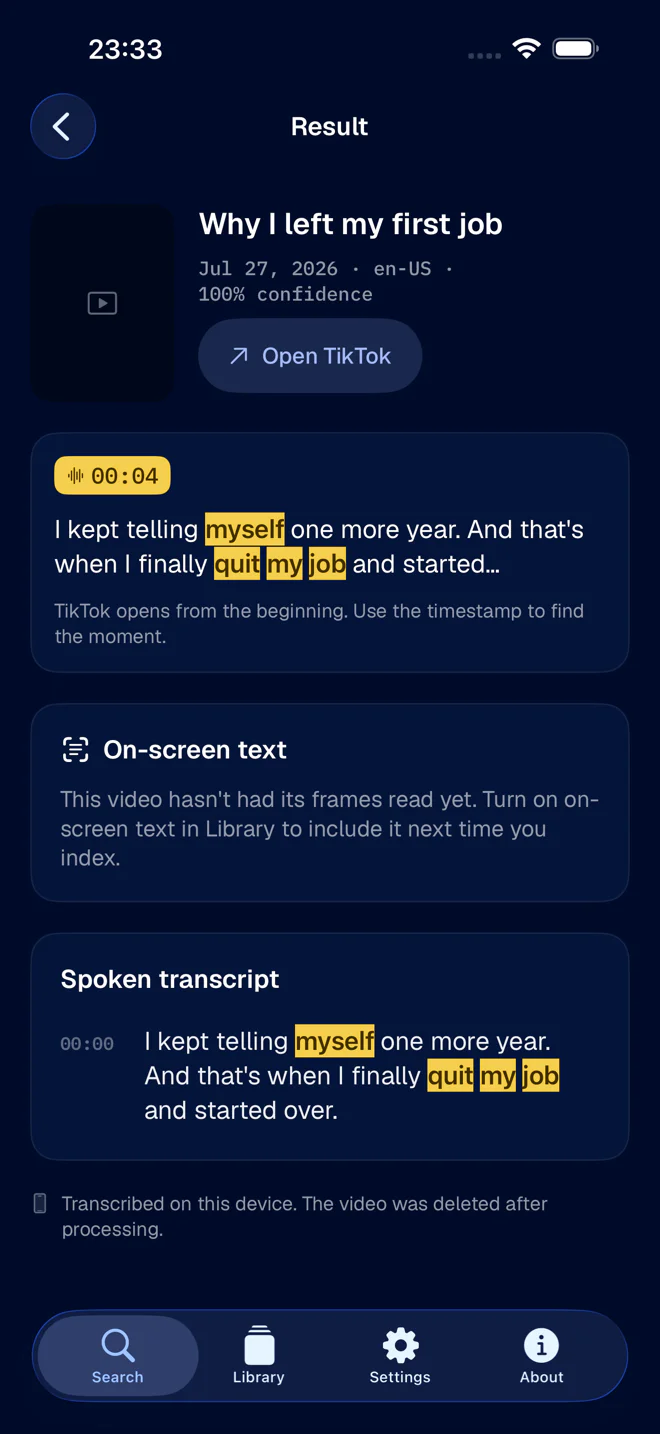
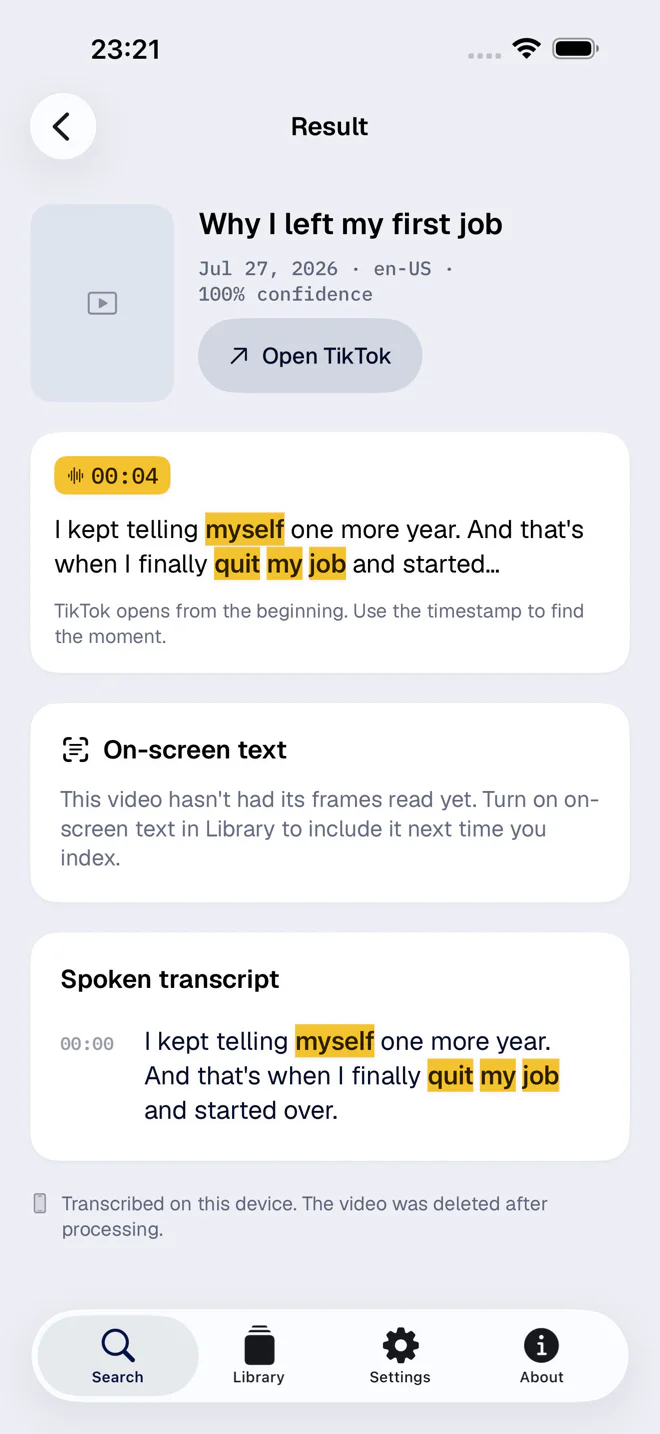
If you turn on on-screen text, it also catches the things you showed rather than said. A screenshot you held up to the camera for two seconds does not appear in any caption.
Then decide, one at a time
Search finds it. Judgement is still yours, and it should be, because context matters and a transcript hit is not a verdict.
Once you have decided, the doing is bulk work: hide a period, delete a handful of videos, clear the reposts you forgot about. FixMyTok is the tool for that side, and its piece on private or delete covers the decision worth making carefully. Hiding is reversible. Deleting gives you 30 days, and then it does not.
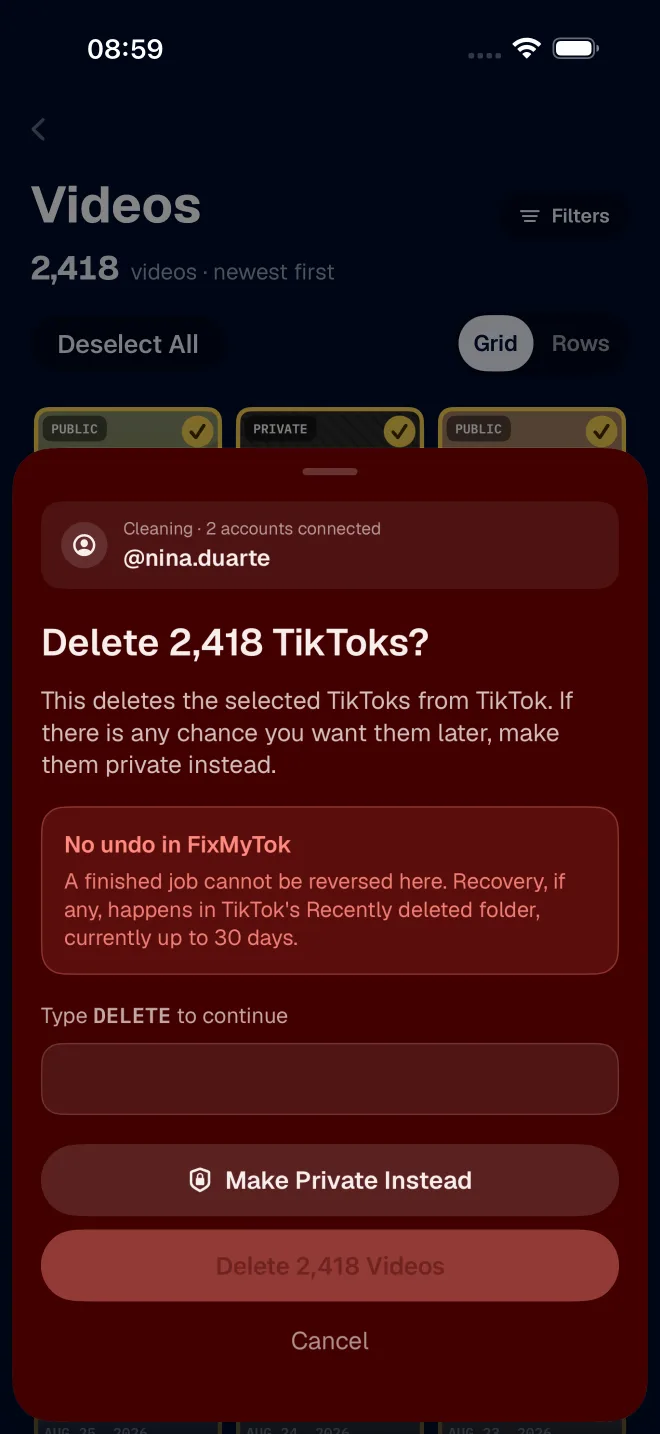
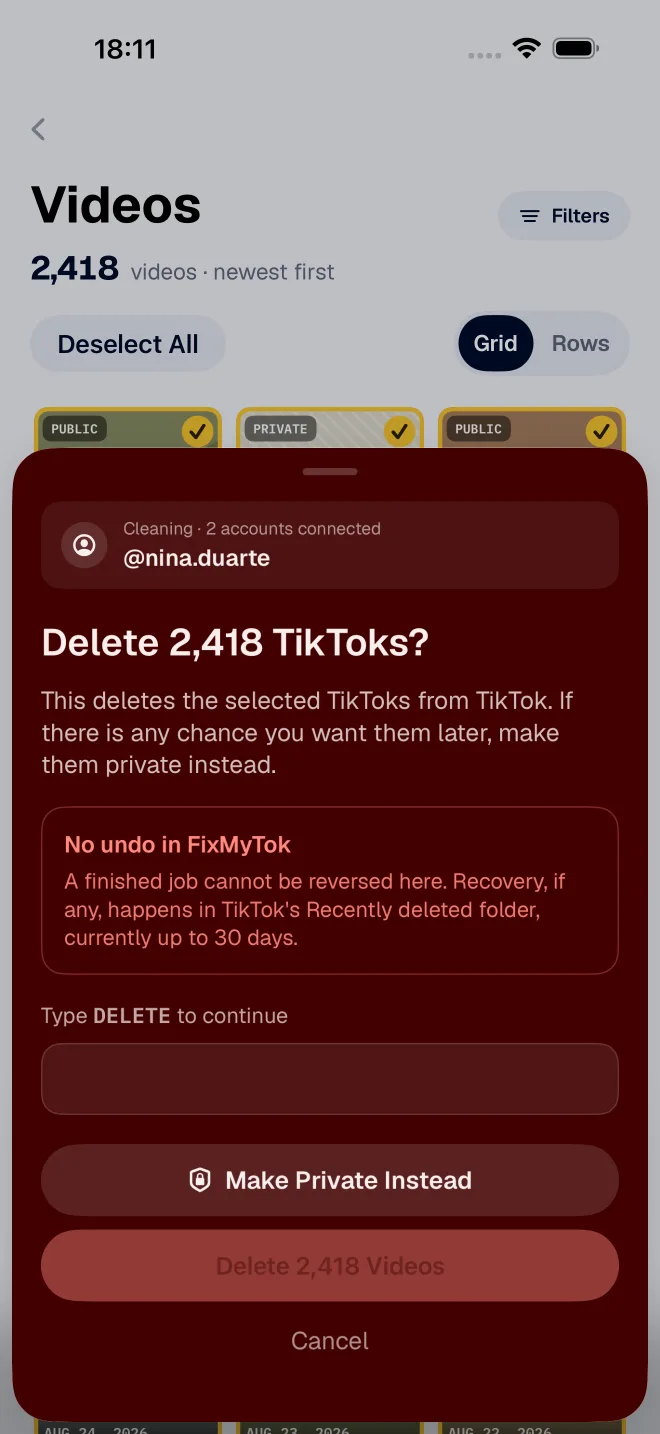
Personally, my advice (for what it is worth) is this: hide almost everything you are unsure about and delete very little. You are auditing a version of yourself, not prosecuting one.